Custom Uniforms vs. Ready-to-Order: How to Choose
Choosing between custom uniforms and ready-to-order uniforms starts with one question: does your team need a garment designed from the ground up, or can a well-designed existing style be adapted to meet the brief?
Finery offers both paths. Finery Studio develops bespoke garments from concept through sample. Finery Core starts with established styles that can be customized for a brand and reordered as a team grows. Both can create a consistent uniform program; the difference is where design and development begin.
The short answer: choose the path that fits the brief
Choose Finery Studio when the garment itself needs to be distinctive. Studio is designed for bespoke development, with control over silhouette, fabric, color, and details. It can be the right fit when an existing style cannot express the brand or meet the role’s requirements.
Choose Finery Core when an existing style already does the job. Core offers a collection of developed garments that can be adapted to the brand, supporting a more direct path to rollout and reordering.
You do not have to make the same choice for every role. A program can use a bespoke piece where the design matters most and Core styles where an established garment is the better operational fit.
Finery Studio vs. Finery Core
Starting point: Studio begins with a concept and garment development. Core begins with a style in Finery’s existing collection.
Design control: Studio allows deeper development of silhouette, material, color, and detailing. Core can be customized within the options available for the selected style.
Sampling: Studio samples are part of developing a new garment. Production-ready samples are also available for review before full manufacturing; see Finery’s sampling and design services.
Best fit: Studio suits a brief that calls for a specific look or construction. Core suits a brief that can be met with an existing style and brand customization.
Ongoing program: Both paths can support consistent uniforms and future orders. The right plan depends on the styles, quantities, locations, and expected reorders.
When bespoke custom uniform design makes sense
Choose a bespoke uniform when the garment is part of how customers recognize your brand, when a specific silhouette or detail is important, or when the work calls for a combination of features that an existing style does not provide.
With Studio, Finery’s design team can develop a garment from concept through sample, exploring the silhouette, fabric, color, and detailing together. For a uniform collection, the design process can also consider how pieces work as a wardrobe: how staff move through the day, how garments layer, and how the different roles look together.
Before choosing bespoke, define what needs to be unique. Is it the shape, fabric, color, construction, or the way several pieces coordinate? A clear brief helps the team focus development on the differences that matter to the brand and the wearer.
New custom styles have their own development requirements, minimums, and timelines. Finery’s current FAQ outlines the published starting requirements; project timing depends on the design and sampling process.
When ready-to-customize uniforms are the better fit
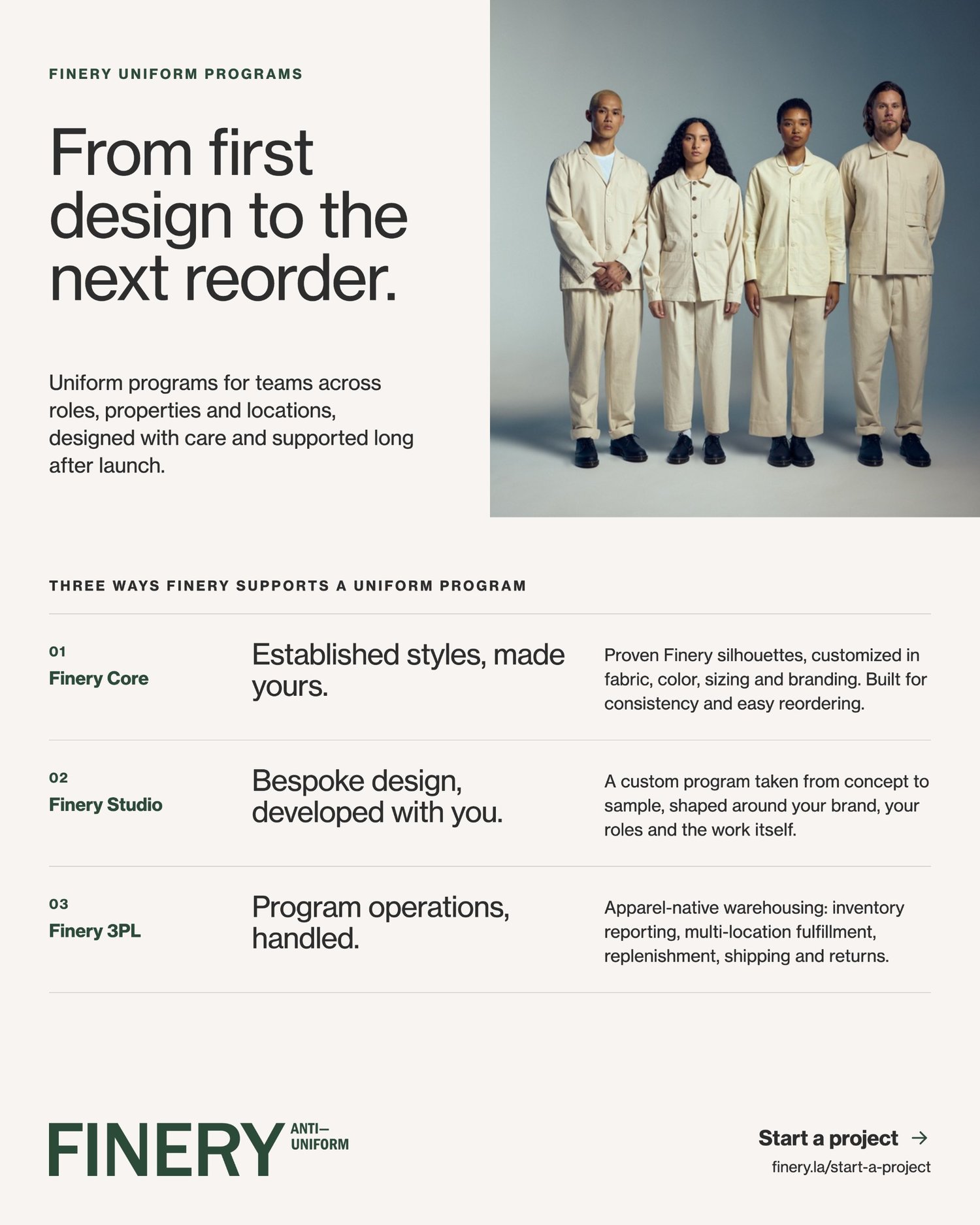
Finery Core is a practical choice when an existing style already works for the role and can be customized to fit the brand. Starting from a developed garment can simplify decisions, make it easier to coordinate pieces across a team, and support a consistent reorder plan.
Core includes styles across categories such as shirts, chef coats, aprons, trousers, dresses, suiting, outerwear, and accessories. Finery can advise on available customization, fabric, and color options for the specific style. The Core shop shows the current collection and product details.
Core is not a generic uniform shortcut. The decision is whether the style, fit, and available customization answer the brief without developing a new garment. If they do, a ready-to-customize option can be an efficient way to outfit a team and plan for future orders.
Minimums and lead times vary by style and order path. Check the current uniform FAQ and product page for the details that apply to your order.
A uniform program can combine both approaches
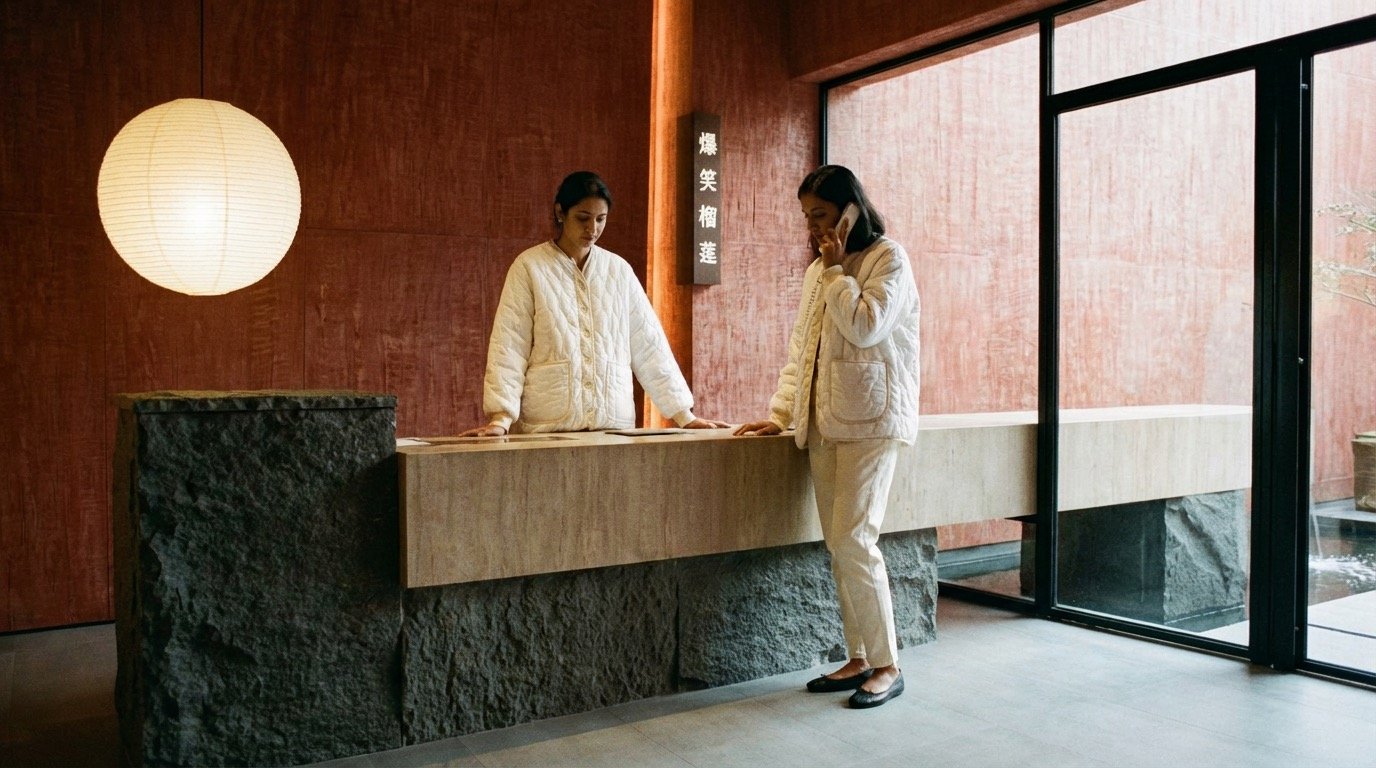
Some organizations benefit from using Studio and Core together. A hotel, restaurant group, or growing brand may want a signature garment for one guest-facing role, while selecting established styles for other departments. That can preserve a recognizable point of view while keeping the full wardrobe coordinated and practical to reorder.
The right mix depends on the people wearing the uniforms and the work they do. Consider the roles, daily movement, comfort, care requirements, how garments fit together, and how many locations need to order over time. Finery’s hospitality collection and project stories can help you see how different uniform wardrobes are developed.
Questions to answer before choosing custom or Core uniforms
- Which roles need uniforms, and what does each role need to do in them?
- What should look distinctive to your brand, and what can start from an existing style?
- Do the available silhouettes, fabrics, colors, and customization options meet the brief?
- How many pieces are needed by style, and how might the team or location count change?
- When do samples, staff fittings, and the first delivery need to happen?
- How will you handle new hires, replacements, and reorders?
Finery can help review those decisions before production begins. Samples can be used to assess fabric, fit, and quality, and larger programs can plan sizing, production, inventory, and fulfillment around their rollout.
Frequently asked questions about custom uniforms
Can I customize an existing uniform style?
Yes. Finery Core styles can be customized within the options available for the garment. Fabric and color choices depend on the style and program; Finery Studio is available when the design needs more extensive development.
Can Finery create a completely new uniform style?
Yes. Finery Studio develops bespoke garments from concept through sample. The FAQ lists current minimums and development details for new styles.
Can I review a sample before ordering uniforms for my team?
Yes. Finery can provide samples for review before full manufacturing. Samples help teams assess fabric, fit, and quality; larger programs may also plan fittings.
How do I compare uniform minimums and lead times?
Minimums and timing depend on whether the project uses a Core style or bespoke Studio development, as well as the style, color, quantity, and sampling needs. Check the current FAQ and product details, or talk with Finery about your brief.
Can a business combine bespoke and ready-to-order uniforms?
Yes. A uniform program can combine custom development and Core styles across roles, as long as the garments work together as one coordinated wardrobe and the ordering plan supports future needs.
Planning custom uniforms for your team? Start a project with Finery or learn about the full process.